Scotland’s industry-led technology accelerator STAC has completed its second investment round, backing three companies whose technologies sit at the heart of national priorities. From quantum computing and housing management to offshore wind infrastructure inspection.
The £772,000 round, co-invested by STAC Invest syndicate brings investment to Quantcore Technologies, Vuabl and Airspection. All three have completed STAC’s intensive 18-month accelerator programme with Vuabl and Airspection establishing their first HQ’s at thebeyond, STAC’s 22,000 sq ft technology hub at Skypark in Glasgow.
The announcement marks a further step in STAC’s progress to become UK’s most active deep tech investor, making more ten investments a year into their accelerator participants. It comes as the organisation begins fundraising for its first Deep Tech fund, targeting between £15 million and £30 million to significantly scale its capacity to back Scottish founders.
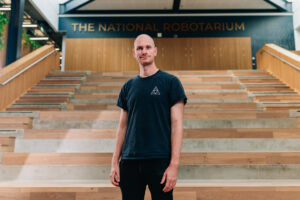
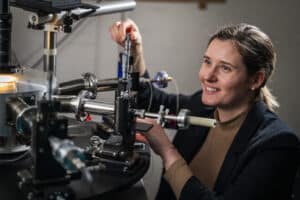
Quantcore Technologies receives £250,000 from STAC Invest in a £2.5M co-investment round. A spin-out from the University of Glasgow, Quantcore is the only company in the UK manufacturing niobium-based superconducting circuits, operating from the James Watt Nanofabrication Centre. Its technology is central to the quantum hardware supply chain that UK government strategy now explicitly depends upon.
Quantcore secured this investment round before Chancellor Rachel Reeves’ announcement this month of up to £2 billion in UK quantum funding, including a £1 billion government procurement programme for commercial-scale quantum computers by the early 2030s. That the UK government has now confirmed quantum as a strategic national priority only strengthens the case for Quantcore building a sovereign domestic supply chain for quantum hardware, designed and manufactured in Glasgow.
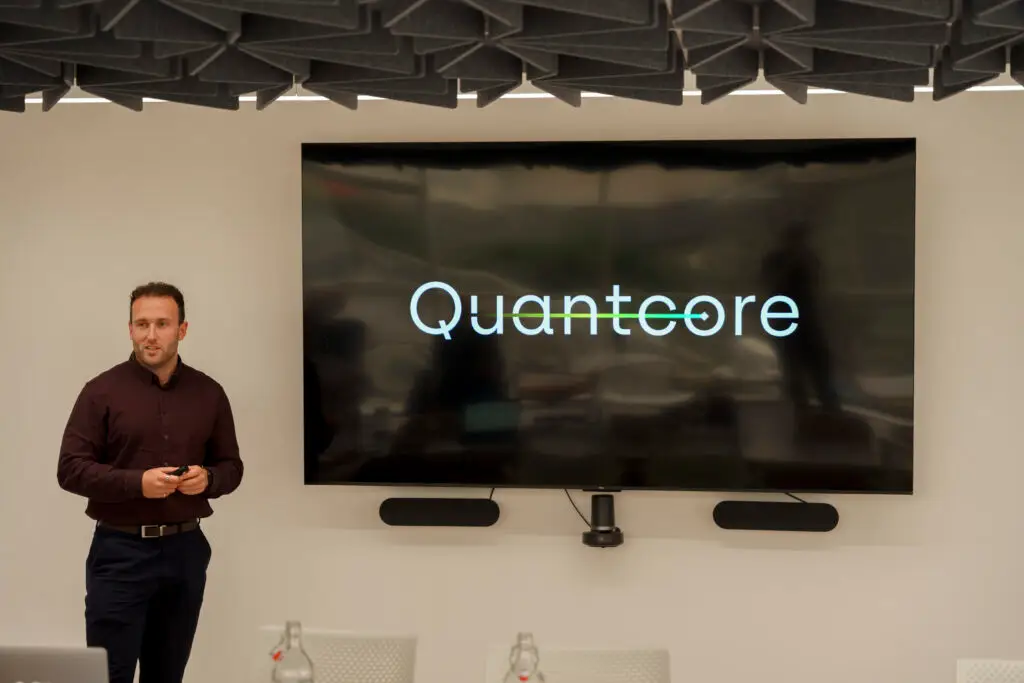
Jack Brennan, Co-founder and CEO of Quantcore Technologies, said: “Before joining the STAC programme I had a rough idea that I wanted to spin out the technology we’d been developing at the University of Glasgow but I had no idea what that actually entailed. STAC gave me the understanding of what it takes to set up and run a company, and critically, what pitching looks like. What needs to go into a deck. What it means to stand up in front of investors and tell a story rather than recite technical details. That’s just not something you’re ever exposed to in academia, and it’s invaluable. The constant cycle of being put in front of investors and showcases genuinely transformed my ability to communicate at a level investors understand. We have just closed a heavily oversubscribed funding round, and I chose to bring STAC in as part of that because of the quality of their mentors and the value of working alongside them over the past year and a half.”
Vuabl receives £222,000, co-invested by STAC Invest. The company has developed software that uses the LIDAR sensors built into modern smartphones to scan properties and generate comprehensive condition reports, covering 3D modelling, energy performance (EPC ratings), structural condition and early detection of damp or mould.
Vuabl has completed a successful pilot with Glasgow’s Wheatley Group, the UK’s largest social housing operator, which manages 65,000. The investment supports Vuabl’s expansion to help landlords, housing associations and social housing providers meet mounting regulatory obligations on energy efficiency, housing standards and tenant safety using nothing more than a smartphone.
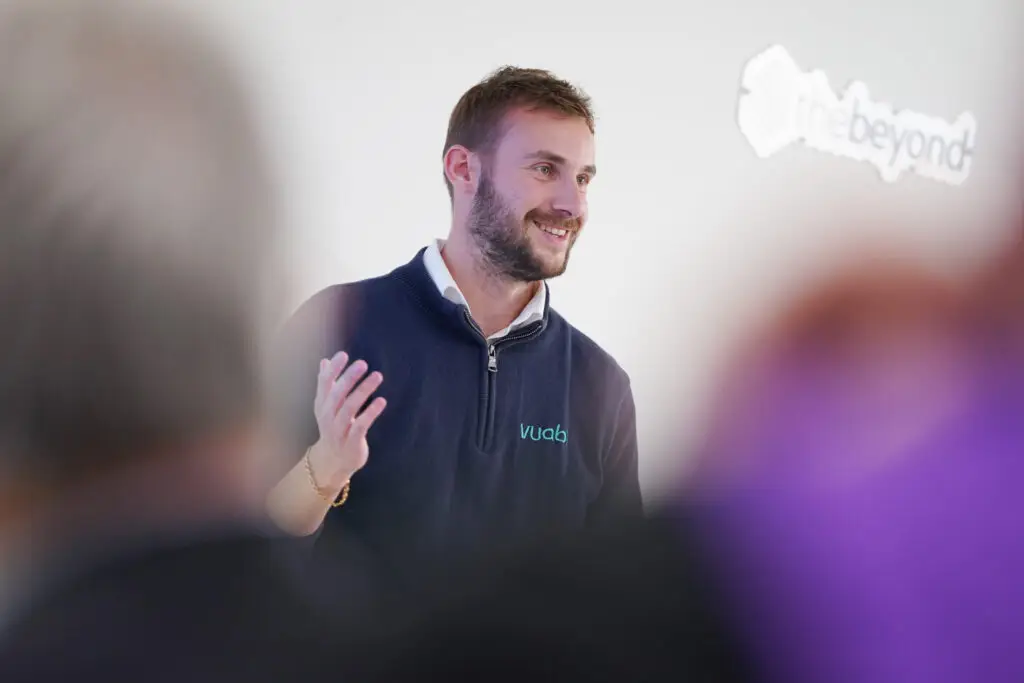
Blair Stirling, Vuabl co-founder, said: “We’re a startup taking on some of the biggest property management businesses in the US, companies doing 70,000 to 90,000 appraisals a month, more than most Scottish surveyors handle in an entire year. Navigating those relationships, structuring proposals, managing enterprise integrations is a whole other world. STAC came in at exactly the right time. They’ve helped us understand how to manage complex deals, how to handle competitive assessment processes, and how to position ourselves in a market that operates very differently to the UK. We’ve made it through multiple rounds with major US clients and we have proposals on the table right now. That doesn’t happen without the right support behind you.”
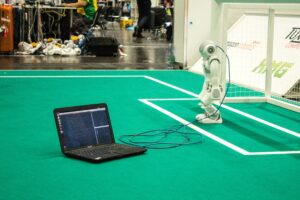
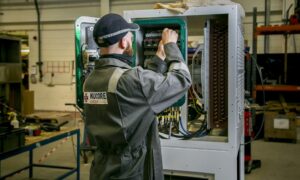
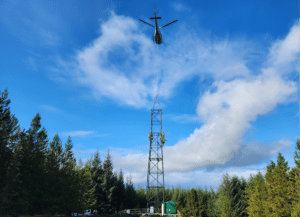
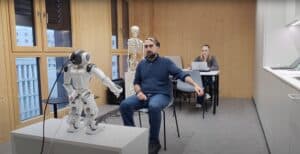
Airspection receives £300,000. The company has developed an autonomous drone that harnesses wind as energy to fly in extreme weather conditions, hovering with precision over offshore wind turbines to carry out structural inspection and maintenance surveys. It removes the need to send engineers into hazardous environments and dramatically cuts the cost and time of inspection at scale.
Beyond offshore wind, the technology has clear applications in surveying critical national infrastructure, power lines, railway networks and coastal assets, immediately following extreme weather events, enabling faster damage assessment and recovery at low cost.
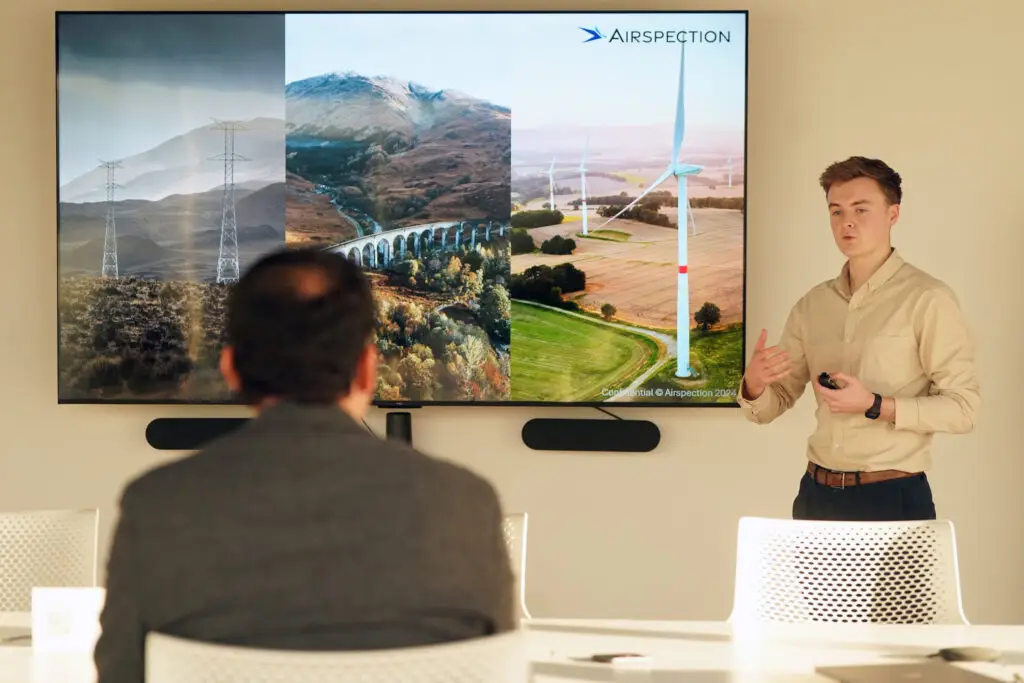
Airspection founder Matthew McLean and Director, said: “We joined STAC almost four years ago, right at the beginning, and the support has been there every step of the way. The programme is built around what you actually need with structured mentorship across specific areas like sales and finance, from people who have genuinely done it before. For us, the most valuable thing has been developing our sales process from scratch and then using that to navigate the full procurement journey, not straightforward territory for a startup. We’re now in paid trials with an offshore operator, we’ve hired a head of engineering and a flight operations manager, and this investment will allow us to demonstrate at a full offshore wind farm. STAC has been central to getting us to this point.”
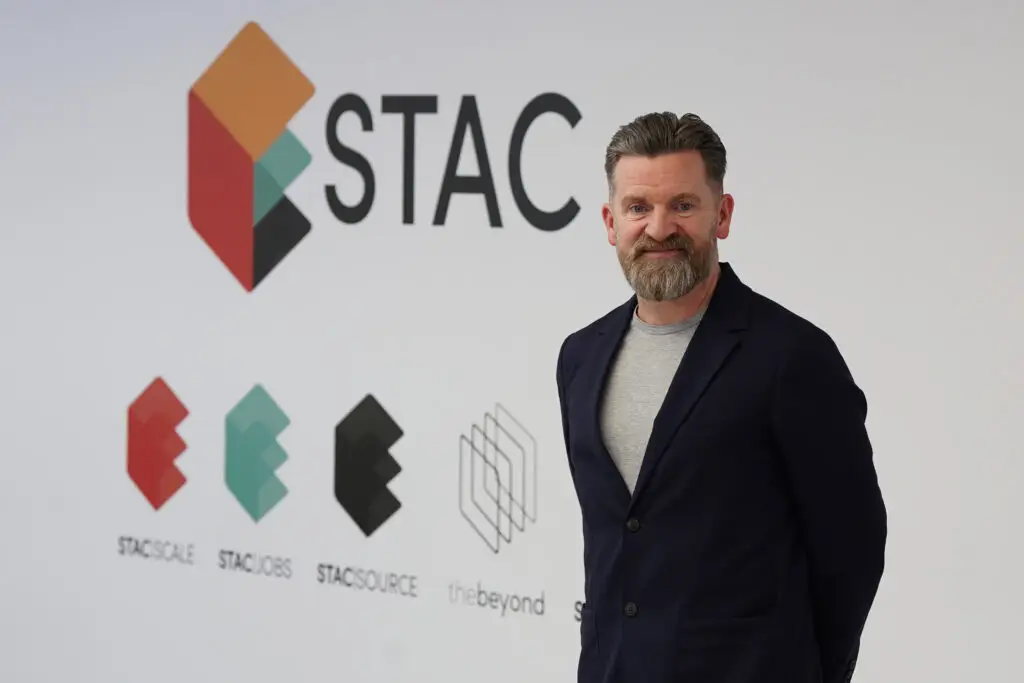
Paul Wilson, CEO and co-founder of STAC, said: “These three companies show exactly what STAC is for. One is helping redefine the future of computing. One is giving people in social housing the right to a healthy, sustainable home. One is making Scotland’s clean energy infrastructure safer and more efficient. Each is a strong story in its own right. Together, they demonstrate the breadth and ambition of what is being built here in Glasgow. Local and global impact at scale. STAC is rapidly advancing our mission towards a global centre of technology excellence from Glasgow!
“STAC’s model is simple: we find the talent and partner with universities, we nurture companies through our programme, we provide world class technology access, we invest in them, and we connect them to corporate partners and contracts that transform promising technology into a globally competitive business, without them having to leave Scotland to do it. The first cheque is just the start. We lean in and help our companies win deals.”
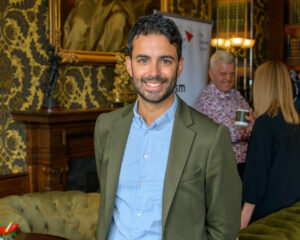
Angus Macfadyen, Head of Investment at STAC, said: “What makes STAC Invest distinctive is not only the significance of first check confidence, but the value that comes with it. We have built relationships with major corporates across technology, energy and critical services, and we use those relationships to open doors for our portfolio companies. Vuabl collaboration with Wheatley is not an accident. It is what industry-led acceleration looks like in practice.
“We have now begun fundraising for our first institutional fund, targeting between £15 million and £30 million. That will allow us to invest at greater scale and move faster because the pipeline of companies coming through STAC’s accelerator programme fully justifies it.”
STAC’s second investment round follows its inaugural round in August 2025, which backed three healthtech companies, all with female co-founders, Silver Lion Innovations, Seluna and Smplicare, developing technology to address mobility challenges, childhood sleep disorders and fall prevention in older adults respectively. The breadth of the combined portfolio spanning quantum computing, AI, medtech, smart housing and clean energy reflects STAC’s commitment to backing the technologies that will define the next decade of Scottish and UK competitiveness.
STAC has now supported more than 120 startups, facilitated more than £50 million in investment into its portfolio, and helped create over 400 jobs. The accelerator is 90% industry-funded through its network of major technology and professional service partners, who provide not only capital but access to global markets, supply chains and technical expertise.