
A response to this morning’s Today Programme ‘debate’ between Martin Sorrell and Sarah Waddington.
The advertising world’s most powerful man just told us that PR is dead. More worryingly, he told us the future is “flooding the internet with content.”
On Radio 4 this morning, Sir Martin Sorrell, whose WPP empire has collapsed from £24bn to £3.1bn in market value, dismissed public relations as obsolete. “There is no such thing as PR anymore,” he declared with remarkable confidence for someone presiding over a company just relegated from the FTSE 100 after nearly 30 years.
In Sorrell’s vision, content creation at scale is the answer. Flood the digital sphere. Overwhelm the algorithms. Ensure your brand appears everywhere from search results and social feeds, to the outputs of large language models. It’s a strategy built entirely on volume, and it should worry anyone who still cares about truth.
When trust dies
We’re living through an unprecedented trust crisis. The news agenda is increasingly set by social media, where algorithms curate for engagement rather than accuracy. And what drives engagement? Anger, outrage, fear. Misinformation travels faster than fact because emotion drives clicks, and clicks drive profit.
Meta’s decision to withdraw fact-checkers was the logical conclusion of this dynamic. When your business model depends on keeping users emotionally charged and scrolling, truth becomes inconvenient. Fact-checking slows things down. So Zuckerberg effectively said: let the community decide what’s true. In an era where conspiracy theorists hold positions of power and most online information is either accidentally wrong or deliberately false, this represents surrender. And now Sorrell wants to pour fuel on this fire.
Trust can’t be bought
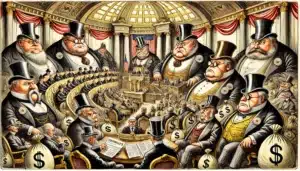
Here’s what Sorrell misses: everything he proposes is paid for. It can be shaped, personalised, optimised. It is owned by the brand, and audiences know it. When people encounter advertising, no matter how sophisticated or cleverly disguised as content, they process it through a filter of scepticism. What are you trying to sell me? What aren’t you telling me? Who’s paying you to say this?
This isn’t cynicism. It’s rational self-defence in an environment where AI will soon control algorithms purposefully editing information to maximise anger and platform engagement.
The relationship between PR and media has never been more critical. Because when trust collapses and nobody knows what to believe, the only currency that matters is credibility. And credibility cannot be bought. It must be earned.
Sarah Waddington pushed back this morning, positioning PR as reputation custodianship and strategic counsel, the discipline that helps organisations work out what they should say, how they should say it, and crucially, whether they should say anything at all. This is the conversation the advertising industry doesn’t want to have: that more content isn’t the answer. That flooding the internet with brand messaging in hopes of gaming AI systems is actively destructive. It corrodes what little trust remains.
Public Relations, done properly, operates through third-party endorsement. Through journalists who ask difficult questions, editorial oversight and media outlets whose reputation depends on accuracy. Yes, both journalists and PRs manipulate facts. But in that tension between storyteller and interrogator, there’s a check. An accountability mechanism. When brands create their own content at scale, that check disappears. No editor, no fact-checker, no journalist asking uncomfortable questions. Just the brand talking to itself, amplified by algorithms designed to maximise engagement rather than truth.
Who do you believe?
WPP’s fall from the FTSE 100 tells us something important: the Mad Men era is over. The model of building empires through scale and buying power no longer works in a world where trust matters more than reach. The future doesn’t belong to whoever creates the most content. It belongs to whoever can be believed.
The conversation this morning wasn’t really about whether PR is part of advertising. It was about whether we address the trust crisis honestly or make it worse by doubling down on the very strategies that created it. In a world where nobody knows what to believe, the last thing we need is more noise. We need trusted voices. We need the patient, difficult work of building and maintaining reputation. That’s not advertising’s job. That’s what PR is for.