It was 1987 and I listed my fathers profession on my first CV. The idea was his, and it seemed perfectly sensible to both of us. Even then, the university careers adviser thought it was unusual.
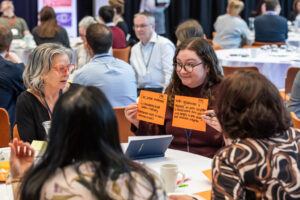
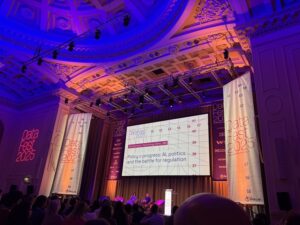
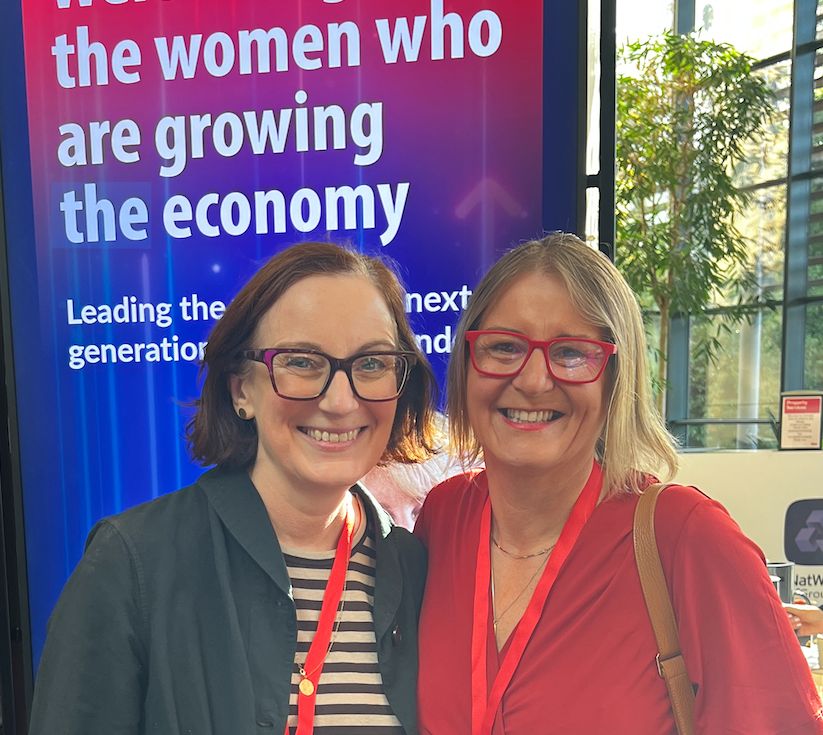
I thought of that CV last week at the Female Founders Growth Summit, in a room full of women who would never dream of putting Dad on their CV.
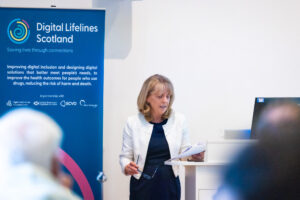
I joined a workshop on storytelling, run by Tessa Rawson, who helps TEDx speakers distill their life’s work into ten minutes. On a TEDx stage, she said, every word has to pay its rent. Asked to sell random objects like a comb or a green crayon to the person beside us, we all gravitated towards the same thing: features. Data.
But data cannot speak for itself. Facts cannot make you care. To make someone care, you have to tell its story.
Tessa gave us a 3 part framework:
Right now. The problem, today.
The stakes. “I know this because I’ve seen…”
Only then. “We’ve built something…”
After almost 40 years in PR, I know facts alone rarely make anyone care. So let me try it.
Right now, all-female founding teams in the UK receive around 2p of every £1 of equity investment. It has been that way for a decade. You’ve probably heard the figure, nodded and scrolled on.
The stakes. That CV tells you about the world I walked into, where a young woman’s credibility could still be borrowed from the man behind her. Barclays expected women to resign on marriage until the early 1960s. The diplomatic service kept the same rule until 1973. A woman could out-earn her husband and still need his signature to buy a fridge on credit. Not until 1975 did the law call that discrimination.
Only then can you see how far we have come and what the women in that room have built. Some 144 UK businesses founded or co-founded by women have now passed £50 million in turnover, and the number still scaling rose by 41 per cent in a single year.
Within one working lifetime, we have gone from women resigning on marriage to women building businesses worth tens of millions.
They have done it on 2p in the pound. Imagine what they could build if the money caught up.