
John Swinney published Scotland’s Programme for Government this week. Five years of priorities, covering everything from housing to health to how many public bodies Scotland actually needs.
At Hot Tin Roof, we work across robotics, energy, life sciences and deep tech, so we read it looking for what it means for those industries specifically. Some came out with real backing. Some got a nod and not much else.
Here’s how it broke down.
The winners
Robotics
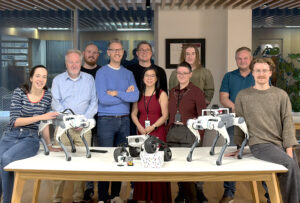
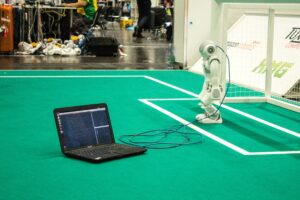
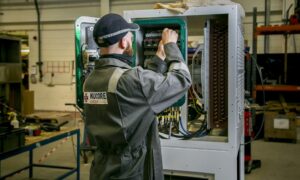
Robotics comes out of this one well. The Cluster Development Programme names robotics, alongside quantum and photonics, as an area where Scotland wants real leadership, and the ambition isn’t vague – it’s aimed at a global robotics market some analysts expect to top $200 billion by 2030.
Scotland’s academic and engineering base gives it a proper shot at that, built on decades of research strength rather than a standing start. For once, the policy language matches the size of the opportunity.
Life Sciences
Life sciences also had a good week. A new AI Hub for health and care, expanded clinical trials capacity, new genomics infrastructure, all building on a sector that’s already ahead of schedule, having beaten its 2025 turnover target of £8 billion (it hit £10.5 billion) and now aiming for £25 billion by 2035.
The one thing missing is the thing the sector keeps asking for – growth capital. Scottish life sciences companies can usually find international investors, but often only on condition they relocate. That’s the bit the document doesn’t touch. Everything else points the right way.
The mixed bags
Energy
Energy is harder to call cleanly. On paper, there’s sizeable money on offer. £500 million in the Just Transition Fund for the North East and Moray, £40 million matched from the Wood Foundation, ongoing support for Mossmorran and Grangemouth.
The trouble is timing. Grangemouth’s refinery has already closed. Mossmorran’s plant shut in February, with the loss of around 400 jobs. A Westminster committee concluded this year that clean energy jobs simply aren’t being created fast enough to replace what’s being lost in the North Sea, and that both governments should have moved sooner.
The funding in this PfG is genuine. Whether it arrives before the next closure is the open question.
Health Inequality
Alongside the NHS reforms getting most of the attention, the PfG leans hard on prevention – a new Prevention Investment Framework, a Population Health Framework, a £530 million GP deal, more walk-in GP services. All mostly useful, and all aimed at the communities where primary care is stretched thinnest. The trouble is the gap they’re meant to close is still enormous.
A Public Health Scotland report published this spring found a 23-year difference in healthy life expectancy between Scotland’s most and least deprived areas for women, and nearly 21 years for men, with under-75 deaths running three times higher in the most deprived fifth of the country. The government’s own tracking of that gap lapsed for a few years too, only recently picking back up.
A gap that size was never going to close inside one five-year term, and to its credit, the document doesn’t pretend it will. Whether it moves those numbers is a different question, however.
The losers
Space
Space gets two passing mentions across 80 pages and nothing else. Read on its own, that looks like neglect. Read against what’s actually happened this year, it looks a little different.
Orbex, one of Scotland’s best-known space companies, collapsed into administration in February. 150 jobs gone, well over £100 million in public and private funding poured in over its lifetime, and no rocket ever launched. Silence is easier than explaining that in an otherwise upbeat document.
Worth remembering, though, that Orbex’s collapse was a launch story, not a manufacturing one. Glasgow still builds more small satellites than anywhere else in Europe – a genuinely world-leading position that the PfG, in all its silence on space, doesn’t even claim credit for. That’s the stranger omission. Not just the setback left unexplained, but the win left unclaimed.
Hydrogen
Hydrogen doesn’t appear once. The UK’s Hydrogen Allocation Round has been criticised by developers as poorly designed for a market this early stage, and several have been openly scaling back investment over the past year.
The flagship H100 Fife trial, testing hydrogen for home heating, has also taken a hit after a Health and Safety Executive review found meaningfully higher risk than the gas it was meant to replace. The silence in the PfG tracks a sector that, it could be argued, is in retreat.
But Scotland still has real hydrogen expertise and infrastructure on the ground, and a quiet year is often exactly when it pays to be the company still in the room with government, not the one waiting for the next cycle.
Where this leaves things
Different sectors, different weeks. Some come out of this with genuine momentum, some with a credible ambition still short of proof, and a couple got left out of a conversation entirely. “Ambitious for Scotland” is the title. Whether that survives contact with a £5bn hole and a minority government is the story we’ll actually be watching, client by client, over the next five years.
Hot Tin Roof is a communications and public affairs consultancy for pioneering science and technology organisations – working across robotics, deep tech, clean energy and life sciences.
We know what matters, what stands up and where it counts.
If any of this affects your organisation, or you’re trying to work out where you sit in it, get in touch.